Natural Alternatives to Antibiotics in Poultry Farming
Today’s poultry industry is adopting new sustainable ways to improve birds health and performance. Although chemical nature of growth promoters “antibiotics” are being included in poultry diets to increase growth, but irrational use of antibiotic growth promoter (AGPs) is creating serious challenges such as antibiotic resistance, drug residues in meat and eggs and rising consumer pressure.
This situation has forced scientist to explore new and natural growth promoters which should be beneficial at all scales. Several natural feed additives such as probiotics, prebiotics, phyto-biotics, organic acids, enzymes, yeast and functional feeds match or even outperform AGPs in sustaining performance (Alagawany et al., 2024). Following strategies seems suitable approaches;
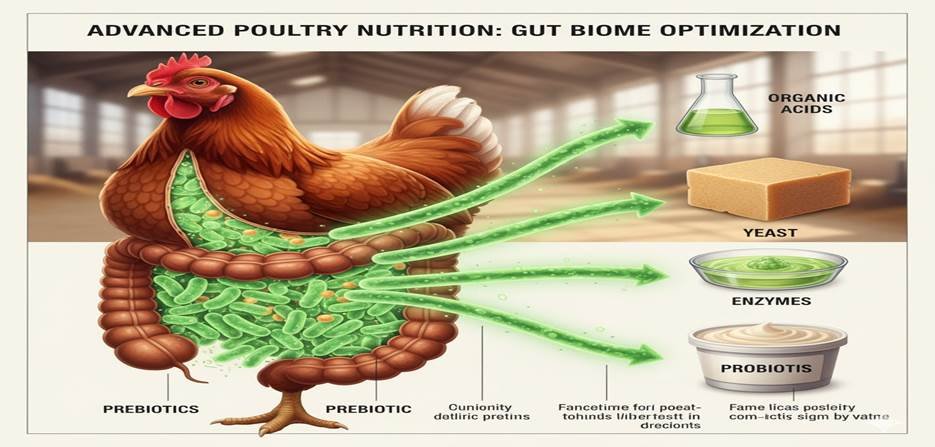
Figure1: Natural solutions replacing antibiotics in modern poultry production.
Probiotics: are the live beneficial micro-organisms confer health benefit in animals upon administration. The meat birds when fed with a basal diet included with probiotics gained more weight and exhibited best feed efficiency. Moreover, layer birds also produced more high-quality eggs when given a diet added with probiotics.
The key mode of action of probiotics includes (i) maintaining normal intestinal microflora by competitive exclusion and antagonism; (ii) altering metabolism by increasing digestive enzyme activity and decreasing bacterial enzyme activity and ammonia production; (iii) improving feed efficiency by better nutrient digestibility (iv) neutralizing enterotoxins and stimulating the immune system (Jin et al., 2007). The Bacillus subtilis Lactobacillus acidophilus and Enterococcus faecium are most effective probiotics species.
2. Prebiotics: These are non-digestible ingredients that beneficially affects the host by stimulating growth of beneficial bacteria. These mainly includes mannan-oligosaccharides (MOS), Fructo-oligosaccharides (FOS) and Inulin. They work by strengthening intestinal lining, reduces pathogen attachment and supports immune modulation. The symbiotic are the combination of probiotics and prebiotics and may exhibit potential feed additives effects.
3. Phytobiotics: Primarily these are herbs and plant extracts. Since two decades these are used in avian feed as growth promoter and are also considered as a non-antibiotic strategy. The geographical origins, harvesting time and plant parts (seeds, leaves, etc.) may affect phyto-biotic active compounds activity. Further, these contain essential oils, alkaloids, and phenolic compounds and improve birds health and growth by beneficially modulating gut environment. Plenty of studies indicates that phyto-biotic act as growth promoter, antimicrobial, antioxidant and anti-inflammation agent. The oregano, thyme, garlic, cinnamon, turmeric, ginger and neem are the most common examples of phyto-biotics.
4. Organic Acids: These are used as feed additive since three decades to enhance production and health of poultry birds and incorporated through feed and water. Studies also indicate their positive effect on gut health. Moreover, these inhibit the growth of harmful bacteria i.e Salmonella and E. coli (Polycarpo et al., 2017). Possible mode of action is that they lower gastrointestinal tract pH, inhibits harmful bacteria colonization, and promote growth of beneficial microbes finally aiding in nutrient digestion. Formic, lactic, citric, and fumaric acids are the examples of organic acids. Now a days encapsulated organic acids are included in poultry feed and their efficiency is well reported. Yang et al., (2019) observed that encapsulated organic acids and essential oils reduced the growth of harmful bacteria and increased short chain fatty acid production and digestive enzyme activity.
4.Enzymes and Yeast: Enzymes act as biological catalysts and increase reaction speed without being consumed. Enzymes are protein in nature. Phytase, protease, amylase, and various other carbohydrases are good examples of enzymes for poultry nutrition. These are added in feed to improve nutrient digestion, absorption, and overall performance.
These exogenous enzymes help break down compounds like phytate, non-starch polysaccharides (NSP), proteins, and starches that are poorly digested by birds. Poudel et al., (2023) reported that dietary protease increased 90-95% crude protein digestibility of key amino acids in Hy-Line W-36 laying hen.
Yeasts are ubiquitously present as eukaryotic unicellular fungi in the environment. Yeast and yeast fermentation products are being successfully used in the feed industry to improve the growth and feed efficiency of livestock. The β-glucans and mannan-oligosaccharides are the much active components of yeast included in poultry diets as immunomodulator and growth promoter. These bind to pathogens like Salmonella, reduce harmful bacteria function and boost immune system.
5.Functional Feeds: Poultry sector has undergone under a massive transition period in current situation. Modern intensive production methods such as genetic improvement, biosecurity measures, health control and feed management have increased productivity and quality. Administration of functional feed additives, including direct-fed microorganisms, dietary prebiotics and phytogenic preparations, can improve birds health and performance and are thought to be a potentially vital part of AGPS free poultry. Sampath and Kim (2025) noted 5–10% increase in growth and 20–25 % disease reduction by dietary pre-and probiotics.
References
Abd El-Ghany WA. Yeasts and Their Derivatives as Functional Feed Additives in Poultry Nutrition. Agriculture. 2025 May 6;15(9):1003.
Alagawany M, Sallam S, Abd El-Hack ME, editors. Organic Feed Additives for Livestock. Elsevier; 2024 Nov 6.
Jin LZ, Ho YW, Abdullah N, Jalaludin S. Probiotics in poultry: modes of action. World’s Poultry Science Journal. 1997 Dec;53(4):351-68.
Polycarpo GD, Andretta I, Kipper M, Cruz-Polycarpo VC, Dadalt JC, Rodrigues PH, Albuquerque RD. Meta-analytic study of organic acids as an alternative performance-enhancing feed additive to antibiotics for broiler chickens. Poultry science. 2017 Oct 1;96(10):3645-53.
Poudel I, Hodge VR, Wamsley KG, Roberson KD, Adhikari PA. Effects of protease enzyme supplementation and varying levels of amino acid inclusion on productive performance, egg quality, and amino acid digestibility in laying hens from 30 to 50 weeks of age. Poultry science. 2023 Mar 1;102(3):102465.
Sampath V, Kim IH. Glimpse of functional feed additives for sustainable broiler production-A Review. Journal of Animal and Feed Sciences. 2025 Jun 6.
Wang H, Liang S, Li X, Yang X, Long F, Yang X. Effects of encapsulated essential oils and organic acids on laying performance, egg quality, intestinal morphology, barrier function, and microflora count of hens during the early laying period. Poultry science. 2019 Dec 1;98(12):6751-60.
Yang X, Liu Y, Yan F, Yang C, Yang X. Effects of encapsulated organic acids and essential oils on intestinal barrier, microbial count, and bacterial metabolites in broiler chickens. Poultry science. 2019 Jul 1;98(7):2858-65.